Powder coating vs bead blasting: Choosing the Right Metal Shield
Powder coating vs bead blasting: Is a matte blasted finish enough, or do you need a thick powder coat? Compare protection, aesthetics, and tolerances to find the perfect shield for your next project.
SURFACE TREATMENT
Violet Gao
4/6/20261 min read
Matte Blasted or Powder Coated?
Choosing the Right Shield for Your Metal
When your project demands long-term survival in harsh conditions, the choice between a thin matte finish and a thick protective shield is critical.
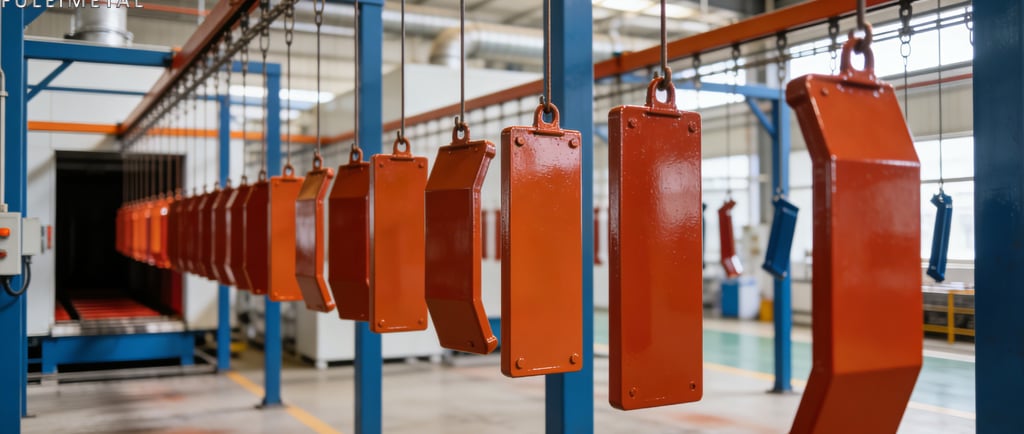
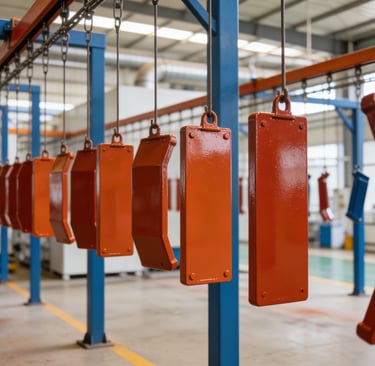
The Heavy-Duty Defender: Powder Coating Powder coating creates a robust, "plastic-like" barrier (80-120 microns thick) that is significantly more resilient than standard paint. It is the gold standard for parts facing moisture, chemicals, or physical impact.
Real-World Case: Livestock Equipment for Global Export. For 10 years, Doing Metal has supplied components for international firms like Hog Slat. These parts live in highly corrosive farm environments.
The Challenge: A decorative matte finish would succumb to oxidation within months.
The Strategy: We utilize heavy-duty Powder Coating with a specific pre-treatment for carbon steel.
The Result: These components have shown a 5-year service life without significant rust or peeling, drastically reducing maintenance costs for the end-user.
The Precision Alternative: Bead Blasting. If your part is a high-precision structural bracket for a UK railway project where tolerances are as tight as ±0.05mm, powder coating might be too thick. In these cases, we recommend Bead Blasting or Anodizing to maintain the dimensional integrity of the TRUMPF-cut design while providing sufficient surface refinement.
Summary: Protection vs. Precision
Need RAL colors and rust protection? Go Powder Coated.
Need tight tolerances and a metallic feel? Go Bead Blasted.
“Not sure about the dimensions? See how [Standard vs. Bead Blasting] preserves your TRUMPF-cut precision.”
Reach out for custom metal fabrication solutions.
Phone
© 2026. Doing Metal, All Rights Reserved. Privacy Policy | Terms of Use | Legal
ADDRESS
No 18 Zhenxing South Road, Qijiashan Street, Beilun District, Ningbo City, Zhejiang Province.