
Aluminum anodizing guide: Why Bead Blasting is Essential for Premium Aluminum
Learn why bead blasting is the critical first step for a flawless anodized look. Our guide explains how pre-treatment affects the final color and durability of your Aluminum anodizing guide components.
SURFACE TREATMENT
Violet Gao
4/6/20261 min read

The Secret to Premium Anodizing:
Why We Always Recommend Pre-Blasting
Many clients ask us: "Can I just anodize my raw aluminum parts?" The answer is yes, but the result might surprise you—and not in a good way.
Anodizing is one of the most durable finishes for aluminum, but it is also the most unforgiving. Because the anodic layer is translucent, it acts like a magnifying glass for surface defects. At Doing Metal, we emphasize that a premium finish starts long before the chemical bath.
Why Bead Blasting is the Essential First Step. Without pre-treatment, anodizing often reveals "grain lines" or minor handling scratches from the bending process. Bead Blasting creates a consistent micro-texture that allows the oxide layer to bond more deeply and uniformly.
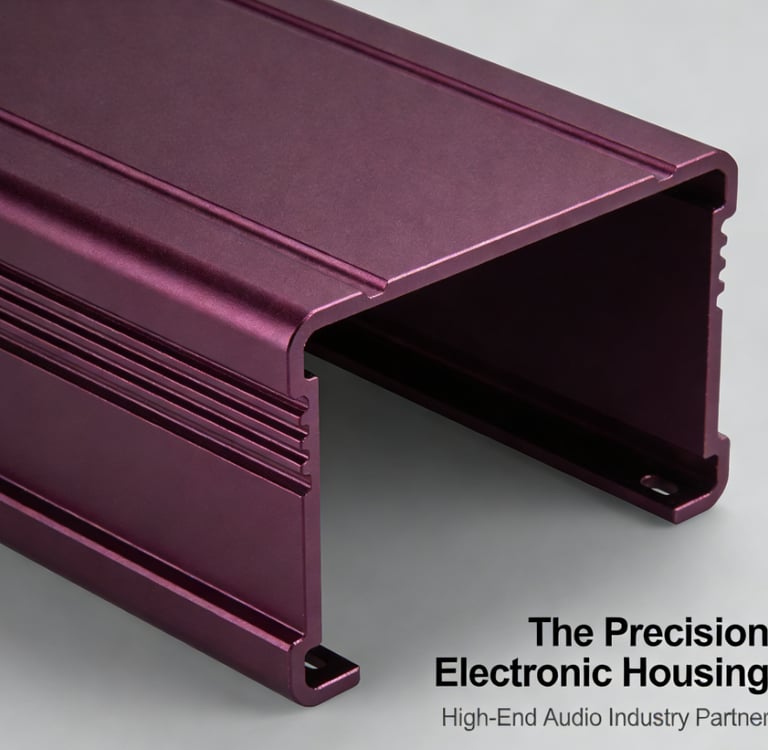
Real-World Case: The Precision Electronic Housing. A partner in the high-end audio industry required deep purple anodized aluminum enclosures. Their previous supplier provided parts with visible "banding" and inconsistent color saturation.
The Doing Metal Solution: We implemented a rigorous Bead Blasting pre-treatment followed by Type II Anodizing.
The Result: The micro-texture diffused the light perfectly, resulting in a rich, uniform matte-purple finish that resembled premium consumer electronics. The "banding" issue was completely eliminated.
Technical Tip for Engineers: For parts requiring Type III Hardcoat, pre-blasting isn't just about looks—it increases the surface area at a microscopic level, leading to a denser and more wear-resistant protective layer.
Reach out for custom metal fabrication solutions.
Phone
© 2026. Doing Metal, All Rights Reserved. Privacy Policy | Terms of Use | Legal
ADDRESS
No 18 Zhenxing South Road, Qijiashan Street, Beilun District, Ningbo City, Zhejiang Province.