How to Choose a Sheet Metal Fabrication Manufacturer: A Complete Buyer's Guide (2026)
Choosing the right sheet metal fabrication manufacturer is one of the most important decisions for OEMs, industrial equipment manufacturers, and product designers. The right supplier can help reduce production costs, improve product quality, shorten lead times, and ensure long-term supply stability. The wrong choice can lead to delays, quality issues, and unexpected costs.
6/26/20262 min read
How to Choose a Sheet Metal Fabrication Manufacturer: A Complete Buyer's Guide (2026)
Introduction
Choosing the right sheet metal fabrication manufacturer is one of the most important decisions for OEMs, industrial equipment manufacturers, and product designers. The right supplier can help reduce production costs, improve product quality, shorten lead times, and ensure long-term supply stability. The wrong choice can lead to delays, quality issues, and unexpected costs.
This guide explains the key factors buyers should evaluate before selecting a custom sheet metal fabrication partner.
What Is Sheet Metal Fabrication?
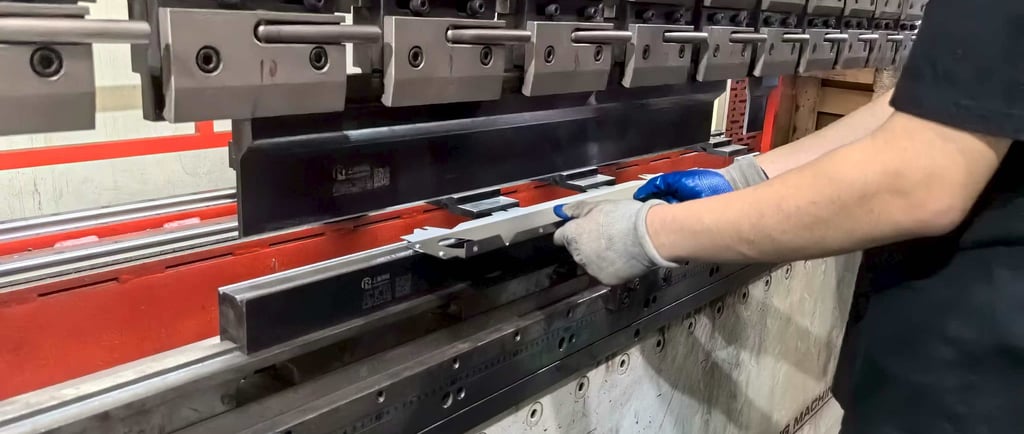
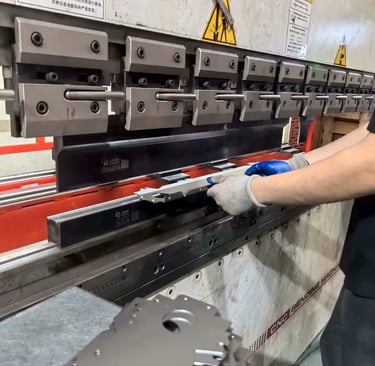
Sheet metal fabrication is the manufacturing process of transforming flat metal sheets into finished components or assemblies through processes such as laser cutting, CNC bending, welding, machining, surface finishing, and assembly.
Common materials include:
Carbon Steel
Stainless Steel (304 / 316)
Aluminum
Galvanized Steel
Copper
Brass
Typical applications include:
Electrical enclosures
Industrial carts and trolleys
Equipment frames
Agricultural machinery components
Automation equipment
Medical equipment
OEM metal parts
1. Manufacturing Capabilities
The first question to ask is whether the manufacturer can complete the entire production process in-house.
An experienced supplier should offer:
Fiber laser cutting
CNC bending
MIG/TIG welding
Spot welding
Hardware insertion
Powder coating
Zinc plating
Galvanizing
Assembly
Packaging
Working with one supplier instead of multiple subcontractors reduces production risk and improves quality consistency.
2. Engineering Support
A good fabrication partner does more than manufacture parts.
They should also help improve your design.
Engineering support may include:
Design for Manufacturability (DFM)
Material recommendations
Cost reduction suggestions
Bend optimization
Welding simplification
Packaging optimization
Early engineering involvement often reduces production costs significantly.
3. Material Options
Different applications require different materials.
MaterialTypical ApplicationsMild SteelIndustrial equipment, frames, cartsStainless Steel 304Food processing, indoor equipmentStainless Steel 316Marine and chemical industriesAluminumLightweight structuresGalvanized SteelOutdoor applications
A reliable manufacturer should provide material certificates when required.
4. Quality Control System
Quality should be built into every production stage.
Ask whether the supplier performs:
Incoming material inspection
First Article Inspection (FAI)
In-process inspection
Welding inspection
Surface finish inspection
Final dimensional inspection
Manufacturers operating under ISO 9001 procedures generally provide more consistent production quality.
5. Surface Finishing Capabilities
Surface treatment affects both appearance and corrosion resistance.
Common finishes include:
Powder Coating
Hot-Dip Galvanizing
Zinc Plating
Electrophoretic Coating (E-Coating)
Brushed Stainless Steel
Sandblasting
The best finish depends on the product's working environment.
6. Production Capacity
Your supplier should be capable of supporting both prototype development and mass production.
Typical production stages include:
Prototype
Small batch
Pilot production
Mass production
This flexibility helps avoid changing suppliers as your business grows.
7. Export Experience
International buyers should evaluate whether the manufacturer has experience shipping worldwide.
Look for capabilities such as:
Export-standard packaging
Knock-down (KD) packaging
Custom wooden crates
Container loading optimization
International quality documentation
Experienced exporters reduce logistics risks and transportation costs.
8. Communication and Project Management
Fast, professional communication is often a strong indicator of reliable service.
Your supplier should provide:
Quick quotation turnaround
Technical clarification support
Production updates
Inspection reports
On-time delivery schedules
A dedicated project manager can simplify communication throughout the project.
Questions to Ask Before Choosing a Supplier
Before placing an order, consider asking:
Can you manufacture based on my drawings?
Do you support OEM and ODM projects?
What materials do you recommend?
Can you provide DFM suggestions?
What certifications do you have?
What is your normal lead time?
Can you support prototype orders?
What inspection reports will be provided?
How are products packaged for export?
These questions help evaluate both technical capability and service quality.
Why Choose Doingmetal?
At Doingmetal, we specialize in custom sheet metal fabrication for industrial customers worldwide.
Our capabilities include:
Fiber laser cutting
CNC bending
Precision welding
Powder coating
Assembly
OEM manufacturing
Custom industrial carts
Electrical enclosures
Agricultural equipment components
From prototype development to high-volume production, our engineering team works closely with customers to optimize design, reduce manufacturing costs, and deliver consistent quality.
Request a Quote
Whether you need a single prototype or large-scale OEM production, our engineering team is ready to help.
Send us your drawings or specifications, and we'll provide:
Design review
Manufacturing recommendations
Competitive quotation
Fast response
Reliable production schedule
Contact Doingmetal today to discuss your next sheet metal fabrication project.
Reach out for custom metal fabrication solutions.
Phone
© 2026. Doing Metal, All Rights Reserved. Privacy Policy | Terms of Use | Legal
ADDRESS
No 18 Zhenxing South Road, Qijiashan Street, Beilun District, Ningbo City, Zhejiang Province.